 By Sandeep Kumar
 The ongoing conflict involving the United States, Iran, and its regional allies has reached a critical and dangerous turning point. The imposition of a US naval blockade on Iran-specifically around the strategically vital Strait of Hormuz-has significantly heightened geopolitical tensions and raised fears of a broader global crisis.
According to Us officials, no Iranian-linked vessels were able to pass through the blockade during its firs 24 hours. This move followed the collapse of peace talks between Washington and Tehran over the weekend. While the blockade is intended to pressure Iran into accepting US demands, it has also triggered strong reactions from global powers such as China and Russia.
This article provides a comprehensive analysis of the blockade, the geopolitical implications, the role of regional conflicts, and the potential impact on the global economy.
US Naval Blockade: Strategy and Objectives
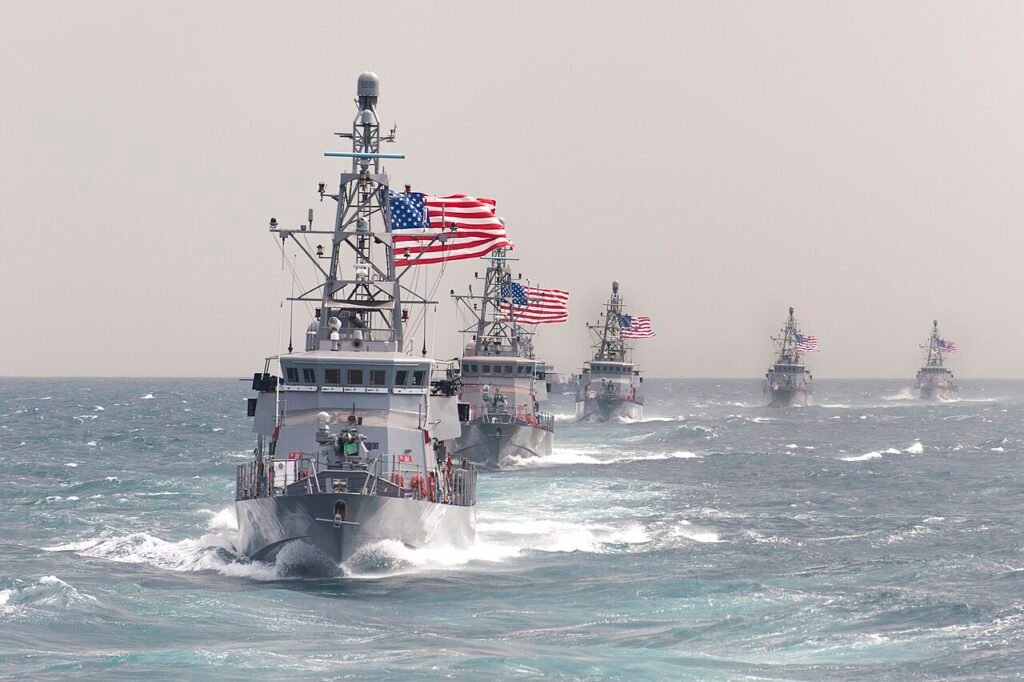
The United States has deployed naval forces near Iran’s coastline to enforce a maritime blockade aimed at restricting Iran’s oil exports and overall sea trade.
According to US Central Command:
- No ships crossed the blockade in the first 24 hours
- At least six vessels were turned away due to links with Iran
- Tanker traffic has slowed dramatically
The primary goal of this blockade is to economically pressure Iran into complying with US demands, particularly regarding its nuclear program and regional influence.
Strategic Importance of the Strait of Hormuz
The Strait of Hormuz is one of the most critical chokepoints in global trade.
- Roughly 20% of the world’s oil supply passes through this route
- It connects the Persian Gulf to the Arabian sea
- Major oil exporters rely heavily on this passage
Any disruption in this region has immediate global consequences, especially on oil prices and supply chains.
Shipping Disruptions and Oil Market Impact
The blockade has already caused significant disruption in maritime traffic:
- Oil tankers are stranded or delayed
- Cargo ships are operating at minimal capacity
- Only a small number of vessels are managing to exit the Gulf
This has led to concerns about a potential spike in global oil prices. Prolonged disruption could lead to fuel shortages, inflation, and economic instability worldwide.
China and Russia React Strongly
Both China and Russia-key allies of Iran-have strongly condemned the US blockade.
China described the move as:
- Dangerous
- Irresponsible
- Escalatory
China is the largest buyer of Iranian oil, importing nearly 80% of Iran’s exports. As a result, Beijing has a direct economic interest in keeping trade routes open.
There are growing concerns that China could increase its naval presence in the region to protect its interests, raising the risk of a direct confrontation with US forces.
Rising Risk of Military Escalation
One of the most alarming aspects of the situation is the risk of miscalculation.
Possible triggers for escalation include:
- Naval standoffs between US and Chinese ships
- Attempts to intercept or escort tankers
- Accidental clashes in congested waters
Experts warn that even a minor incident could escalate into a major international conflict involving multiple global powes.
Diplomatic Efforts and Possible Renewed Talks
Despite the rising tensions, diplomatic efforts have not completely collapsed.
Donald Trumps has suggested that negotiations with Iran could resume within days, potentially in Islamabad, Pakistan, where previous talks were held.
However, skepticism remains high. The previous round of talks failed due to deep disagreements, and there is little indication that positions have significantly changed.
Key Sticking Points Between the US and Iran
Three major issues continue to block progress in negotiations:
1. Reopening the Strait of Hormuz
Iran demands the removal of the blockade and restoration of normal shipping operations.
2. Iran’s Nuclear Program
The US insists that Iran must:
- Abandon its nuclear ambitions
- Hand over enriched uranium stockpiles
3. Israel-Lebanon Conflict
Iran demands a halt to Israeli military operations in Lebanon, while the US considers this a separate issue.
Israel-Lebanon Talks: A History Development
In a significant diplomatic development, officials from Israel and Lebanon have met face-to-face in Washington for the first time in decades.
Benjamin Netanyahu has made it clear that Israel will continue its military operations against Hezbollah.
Meanwhile, Lebanon is pushing for:
- An immediate ceasefire
- Withdrawal of Israeli forces
Despite the historic nature of the talks, both sides remain far apart on key issues.
The Role of Hezbollah
Hezbollah remains a central factor in the conflict.
- It is an Iran-backed militant and political group
- It holds significant influence within Lebanon
However, Hezbollah is not part of the current diplomatic talks, making any lasting agreement more difficult to achieve.
Humanitarian Crisis in Lebanon
The conflict has caused severe humanitarian consequences in Lebanon:
- Over 2,000 people killed
- More than a million displaced
- Widespread destruction of infrastructure
The Lebanese government faces a complex challenge: balancing internal political divisions while responding to external military pressure.
Global Economic Concerns and IMF Warning
The International Monetary Fund has issued a stark warning about the potential economic impact of the conflict.
Key concerns include
- A possible global recession
- Rising oil prices
- Disrupted trade routes
The IMF has revised global growth forecasts downward and warned that the situation could worsen significantly if the conflict continues.
Comparisons to the 1970s Oil Crisis
Some analysts believe that the current crisis could surpass the severity of the 1970s oil shock.
Potential consequences include:
- Rapid inflation
- Energy shortages
- Economic slowdown across major economies
Countries Most at Risk
Oil-importing nations are particularly vulnerable
These include:
- Pakistan
- Several South Asian economies
- Developing nations dependent on fuel imports
Such countries could face:
- Rising unemployment
- Increased poverty
- Food insecurity
European Response and Policy Shifts
In response to the conflict, several European nations are reassessing their policies.
Italy has announced the suspension of its defense agreement with Israel, signaling growing unease within Western alliances.
Defense Spending and NATO Pressure
The crisis has also reignited debates over defense spending among NATO countries.
Many governments are now under pressure to:
- Increase military budgets
- Strengthen defense capabilities
This has created political challenges, particularly in countries already facing economic constraints.
Possible Future Scenarios
Scenario 1: Diplomatic Breakthrough
- Talks resume successfully
- Blockade is lifted
- Ceasefire agreements are reached
Scenario 2: Prolonged Standoff
- Blockade continues
- Economic pressure increases
- Regional tensions remain high
Scenario 3: Full- Scale Conflict
- Direct military confrontation
- Involvement of global powers like China
- Widespread global instability
Conclusion
The US-Iran conflict has entered a highly volati8le phase, with the Strait of Hormuz blockade serving as a major flashpoint. While diplomatic efforts continue, the risks of escalation remain significant.
The outcome of this crisis will not only shape the future of the Middle Eat but also have tar-reaching implications for the global economy and international security.
In the coming days, the world will be watching closely to see whether diplomacy prevails-or whether the situation spirals into al larger and more dangerous conflict.
According a Anjannews.free.nf