 By Sandeep Kumar
 The Iran US War 2026 has entered a critical and dangerous phase, marked by escalating military actions and rising geopolitical tension. The confrontation between the United States and Iran is no longer limited to strategic warnings but has evolved into a multi-dimensional conflict involving air power, infrastructure warfare, and regional escalation.
The escalating confrontation between the United States and Iran has entered a critical and dangerous phase, marked by high-impact military actions and increasingly aggressive rhetoric. What was once a controlled geopolitical rivalry has now transformed into a multi-dimensional conflict involving air power, infrastructure warfare, and regional escalation.
Two major developments have intensified global concern: Iran’s claim of downing a highly advanced American fighter jet, and the United State targeted strike on a key Iranian bridge. Together, these incidents signal a shift toward deeper military engagement, with consequences that extend far beyond the immediate battlefield.
The F-15E Strike Eagle Incident: A strategic Shock
At the center of recent developments is Iran’s claim that it successfully shot down an American F-15E Strike Eagle, one of the most capable multirole combat aircraft in the US arsenal./ While independent confirmation remains unavailable, the implications of such an event are significant enough to reshape the narrative of the conflict.
Understanding the F-15E Strike Eagle
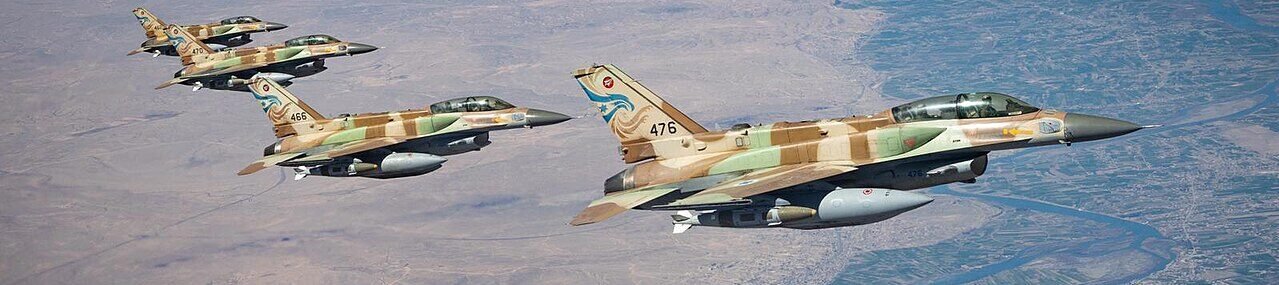
The F-15E Strike Eagle is not just another fighter jet-it is a cornerstone of US air dominance strategy. developed as a dual-role platform, it combines air superiority capabilities with deep strike precision, allowing it to operate far inside hostile territory without compromising effectiveness.
Advanced Combat Capabilities
Deep Strike Operations:
The aircraft is specifically designed to conduct long-range, high-precision attacks against heavily defended targets, including command centers, air defense systems, and critical infrastructure.
Speed and Mobility:
With a maximum speed exceeding Mach 2.5, the F-15E can rapidly penetrate enemy airspace and exit before effective countermeasures are deployed.
Payload Versatility:
It can carry over 10,000 kilograms of mixed ordnance, including:
- Joint Direct Attack Munitions (JDAMs)
- Laser-guided bombs
- Air-to-air missiles such as AIM-120 AMRAAM
- Air-to-ground missiles
All- Weather, Day-Night Capability:
Equipped with advanced radar systems and targeting pods, the aircraft can operate in adverse weather and low-visibility conditions.
Crew Configuration:
Unlike many fighter jets, the F-15E is operated by a two-person crew:
- Pilot
- Weapon Systems Officer (WSO), pesponsible for targeting and electronic systems
Iran’s Air Defense Claim
According to Iranian sources:
- The aircraft was intercepted by a layered air defense network
- Surface-to-air missile systems successfully locked onto and engaged the target
- The jet was brought down in southwestern Iran
- One crew member was reportedly rescued, while another remains unaccounted for
Strategic Implications
If confirmed, this would represent:
- A rare loss of a high-value US combat aircraft
- Evidence of improved Iranian air defense capabilities
- A potential shift in aerial risk calculations for US operations
However, defense analysts emphasize caution. In modern warfare, such claims are often part of information and psychological operations, aimed at influencing perception as much as reality.
US Airstrike on Iranian Bridge: Escalation Through infrastructure Targeting
Shortly after the jet incident, the United states carried out a precision airstrike on a major Iranian bridge, marking a significant escalation in the conflict.
Impact of the Strike
- Casualties: 8 fatalities and 95 injuries
- Damage: A large section of the bridge collapsed, rendering it unusable
- Operational Disruption: Severe impact on transportation and logistics
Why the Bridge Was Targeted
US officials stated that the bridge served dual purposes:
- Civilian transportation
- Military logistics and troop movement
By targeting this structure, the United States aimed to disrupt Iran’s ability to mobilize forces and sustain operations.
Legal and Strategic Debate
The strike has sparked international debate regarding the legality of targeting infrastructure.
Key Concerns
- Civilian casualties raise proportionality issues
- Dual-use infrastructure complicates legal justification
- Long-term humanitarian consequences are significant
While military planners may view such targets as strategically valuable, their destruction often leads to broader societal impact.
Iran’s Retaliatory Doctrine: “Eightfold response”
In response, Iran issued a clear and forceful warning: any continued attacks on its infrastructure would be met with a significantly amplified response.
Core Elements of the threat
- Identification of eight strategic bridges in Gulf nations
- Targeting of infrastructure linked to US allies
- Promise of a response many times stronger
This declaration has introduced a new level of uncertainty into the region.
Regional Fallout: Gulf Nations on Edge
Gulf countries now find themselves in a precarious position.
Why the Concern Is Growing
- Dependence on stable infrastructure for oil exports
- Close strategic alignment with the United States
- Vulnerability to missile and drone attacks
Possible Outcomes
- Disruption of global energy supply
- Economic instability
- Increased military readiness across the region
The threat of infrastructure attacks has effectively expanded the battlefield beyond the immediate conflict zone.
Strait of Hormuz: The Ultimate Pressure Point
U.S. Energy Information Administration
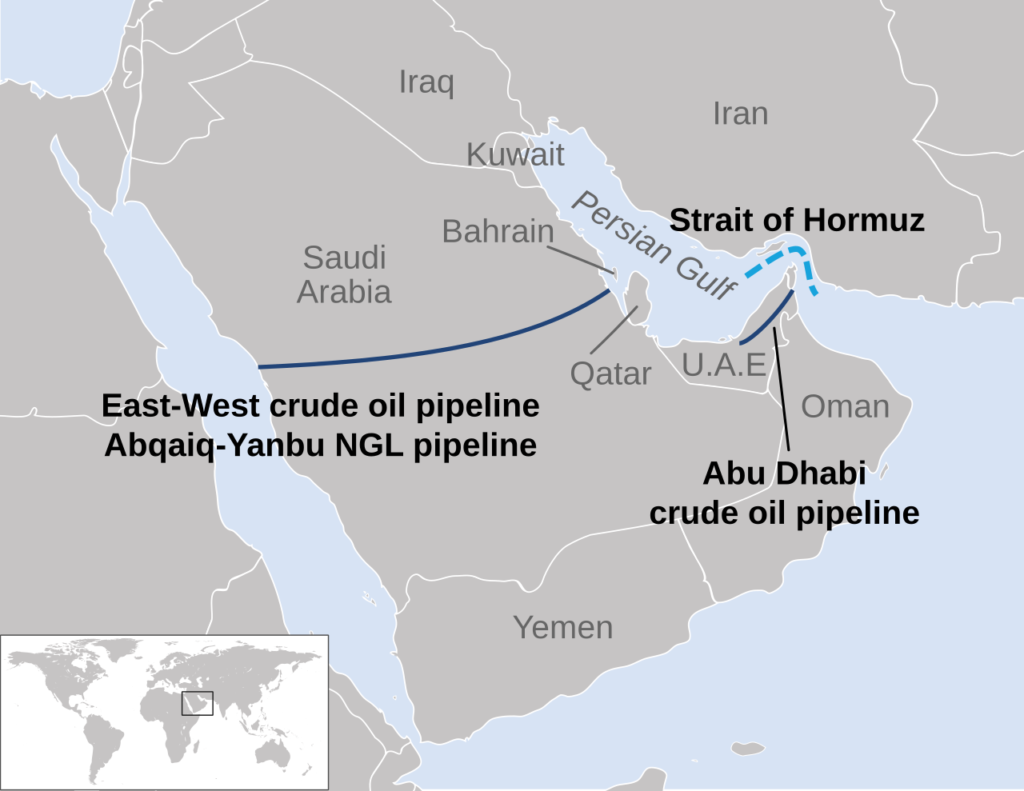
The Strait of Hormuz remains the most critical strategic location in this conflict.
Global Significance
- Nearly one-fifth of global oil supply passes through it
- Essential for international energy markets
- Any disruption would have immediate worldwide impact
Iran’s Leverage
Iran retains the capability to:
- Deploy anti-ship missiles
- Use naval assets to disrupt shipping
- Potentially block the strait
This makes the waterway a central element in Iran’s strategic calculations.
Expanding Conflict: Strikes on Israel
Iran’s response has also extended to Israeli territory, signaling a broader regional confrontation.
Nature of Attacks
- Ballistic missile launches
- Use of cluster munitions
- Targeting of urban and strategic areas
Consequences
- Infrastructure damage
- Civilian casualties
- Increased regional instability
The Shift to Infrastructure Warfare
The conflict has clearly transitioned into a phase of infrastructure targeting.
Evolution of Strategy
- Military installations targeted
- Civilian institutions affected
- Transportation networks destroyed
- Potential future attacks on energy infrastructure
Objective
- Cripple logistical capabilities
- Undermine economic stability
- Force strategic concessions
Iran’s Long War Strategy
Iran appears prepared for a prolonged conflict.
Key Features
- Preservation of missile capabilities
- Emphasis on asymmetric tactics
- Strategic targeting rather than direct confrontation
This approach allows Iran to offset conventional disadvantages.
Psychological and Information warfare
Information control is now a central component of the conflict.
Methods
- Publicizing military claims
- Amplifying strategic messaging
- Influencing domestic and international opinion \
The F-15E incident fits into this broader context.
Future Outlook
The likelihood of immediate de-escalation remains low.
Key Drivers of Continued Conflict
- Ongoing military operations
- Lack of diplomatic engagement
- Increasing regional involvement
The situation may continue to deteriorate in the near term.
Global Implications
Economic Impact
- Rising oil prices
- Market volatility
- Trade disruptions
Geopolitical Impact
- Shifting alliances
- Increased military tensions
- Broader instability
Conclusion
The Iran-US conflict has reached a decisive and dangerous stage. The reported downing of an F-15E Strike Eagle, combined with the destruction of critical infrastructure and escalating retaliation threats, underscores the severity of the situation.
With the Strait of Hormuz under constant threat and regional actors increasingly involved, the potential for a wider conflict cannot be ignored. Without urgent diplomatic intervention, this crisis may evolve into one of the most consequential geopolitical confrontations of the decade.
According a Anjan News Live
According to Wikimedia Commons