
Facebook Papers History: How a Whistleblower Exposed Meta and What Changed After 2021
From algorithm controversies and misinformation to teen safety, global violence and new regulations, the Facebook Papers changed how the world looks at social media.
For years, Facebook presented itself as a technology company built around a simple idea: connect people.
It helped families stay in touch across continents. It allowed small businesses to find customers. It gave activists, journalists and ordinary citizens a platform to speak to enormous audiences.
But by 2021, a much darker question had emerged.
What happens when a platform designed to connect billions of people also learns that anger, fear and outrage can generate enormous engagement?

That question exploded into public view with the Facebook Papers.
The documents came from inside Facebook, which later became Meta. They revealed internal research, debates and warnings about some of the company’s most difficult problems. The material raised serious questions about Instagram and teenage mental health, misinformation, political polarization, content moderation and the way algorithms could amplify harmful material.
At the center of the story was a former Facebook employee named Frances Haugen.
Her disclosures did not prove that every problem on Facebook was intentionally created by the company. Nor did they establish that algorithms alone caused every example of violence or political instability discussed in the documents.
But the Facebook Papers exposed something deeply important:
Inside one of the world’s largest technology companies, employees and researchers were asking many of the same questions that critics outside the company had been asking for years.
Today, the story has become even bigger.
Since the Facebook Papers emerged, Facebook has changed its corporate identity. Meta has faced new laws, investigations, lawsuits and regulatory pressure. The debate over content moderation has shifted dramatically. In the United States, Meta ended its third-party fact-checking program and moved toward Community Notes. Meanwhile, governments and courts have increasingly focused on the safety of children and teenagers online.
So, nearly five years after the Facebook Papers became global news, what actually changed?
And did the scandal make Facebook and the wider social-media industry safer?
This is the updated history of the Facebook Papers.
What Were the Facebook Papers?

The Facebook Papers were a huge collection of internal company documents that became public in 2021.
The documents were provided to journalists and regulators by Frances Haugen, a former Facebook employee who became a whistleblower.
They included internal research, presentations, reports and discussions about problems involving Facebook and Instagram.
Journalists from multiple major news organizations examined the material.
The disclosures covered a wide range of issues, including:
- The recommendation systems used by Facebook.
- Misinformation and political polarization.
- Hate speech.
- Violence and extremist content.
- Instagram and teenage users.
- Content moderation in different languages.
- The company’s approach to political pressure around the world.
The Facebook Papers became one of the most important technology scandals of the early 2020s because they offered an unusual look inside the company itself.
For years, researchers and critics had argued that social-media algorithms could create harmful incentives.
The Facebook Papers showed that Facebook’s own employees were also studying many of these problems.
That distinction mattered.
The debate was no longer simply about outside critics accusing Facebook of causing harm.
It was also about what the company knew internally, what actions it considered and how it balanced safety against the practical demands of operating a gigantic global business.
Who Is Frances Haugen?

Frances Haugen had worked in the technology industry before joining Facebook.
She joined the company and eventually worked on areas related to civic integrity and misinformation.
According to her public testimony, she became increasingly concerned about decisions being made inside Facebook.
She argued that the company’s products could contribute to serious social problems and that the public did not have enough information about what Facebook knew internally.
In 2021, she left the company.
Before doing so, she copied internal documents that later became the basis of the Facebook Papers reporting.
Haugen then worked with journalists and spoke publicly about her concerns.
She testified before the United States Congress and became one of the world’s most recognizable technology whistleblowers.
Her argument was not simply that Facebook contained harmful content.
Every major social platform struggles with harmful content.
Her deeper argument was about incentives.
Haugen claimed that Facebook’s business model encouraged the company to prioritize engagement and growth even when internal research suggested that certain product designs could create serious risks.
Meta strongly disputed the broader interpretation that the company deliberately chose profit over safety.
The company argued that critics were selectively presenting internal documents without the full context of the research and decisions involved.
That disagreement remains central to the story.
Why the Facebook Papers Were So Important

The Facebook Papers arrived at a moment when public trust in major social-media companies was already declining.
Facebook had already faced years of controversy.
There had been debates over:
- Election interference.
- Political misinformation.
- Cambridge Analytica.
- Hate speech.
- Data privacy.
- The spread of conspiracy theories.
- The January 6 attack on the U.S. Capitol.
The Facebook Papers did not create these controversies.
They added another dimension.
They gave the public a glimpse into how Facebook researchers and executives discussed problems behind closed doors.
For many critics, the documents supported a troubling argument:
Facebook did not simply fail to recognize some of its problems. In certain cases, employees had identified serious risks internally.
The difficult question then became:
What happened after those warnings were identified?
The Algorithm Problem

One of the biggest debates surrounding Facebook has always involved its algorithms.
Facebook does not simply show every post in chronological order.
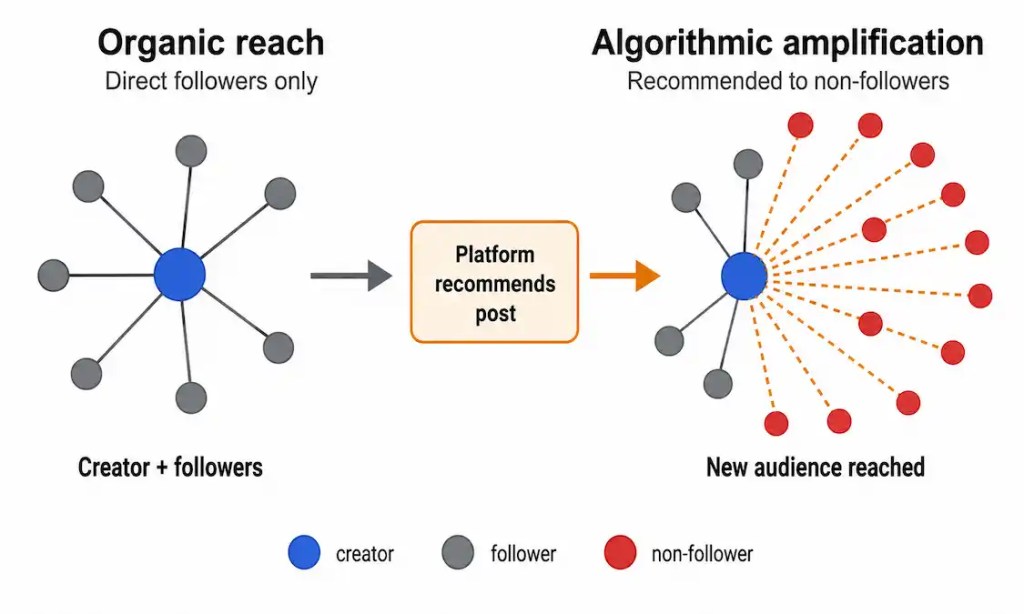
Instead, modern social-media platforms use complex systems to decide what individual users are most likely to see.
These systems consider many signals.
They may analyze:
- Previous interactions.
- Likes.
- Shares.
- Comments.
- Viewing behavior.
- Relationships between users.
- The popularity of particular content.
The purpose is often to make the platform more relevant and engaging.
But engagement creates a difficult problem.
Human beings do not always engage most strongly with calm or neutral information.
Anger can generate engagement.
Fear can generate engagement.
Controversy can generate engagement.
A dramatic argument may attract more comments than an ordinary conversation.
This creates what critics describe as an incentive problem.
An algorithm does not necessarily need to be programmed to promote hate.
But if highly emotional and divisive content repeatedly generates stronger engagement signals, the system may amplify that material.
That does not mean every recommendation system automatically promotes extremism.
The reality is more complicated.
But the Facebook Papers helped make one thing clear:
The relationship between engagement and harmful content had become a serious issue inside the company itself.
Facebook’s Polarization Problem

Social media can make political discussion more accessible.
It can also make political divisions more intense.
The Facebook Papers renewed debate about whether recommendation systems contribute to so-called information bubbles.
An information bubble can develop when users repeatedly see material that confirms what they already believe.
Over time, opposing perspectives may become less visible.
This can produce an environment where people increasingly believe that their own community represents the obvious truth while opposing groups appear dangerous, dishonest or irrational.
However, the problem is not caused only by technology.
Political polarization existed long before Facebook.
Newspapers, television networks, political parties and social communities have always influenced how people understand the world.
The difference is speed and scale.
A controversial post can now reach millions of people almost instantly.
Algorithms can also personalize information for individual users.
That creates a fundamentally different media environment.
The Facebook Papers pushed governments, researchers and the public to ask whether technology companies should be responsible not only for removing illegal content but also for understanding how their systems amplify certain types of information.
The India Debate and Content Moderation

One of the most important parts of the original Facebook Papers discussion involved content moderation outside the United States.
Facebook operates across countries with hundreds of languages.
That creates an enormous challenge.
A moderation system that works effectively in English may perform poorly in another language.
Understanding harmful speech requires more than translating individual words.
Context matters.
Political history matters.
Cultural references matter.
A sentence that appears harmless to an automated system may have an extremely dangerous meaning within a particular community.
The Facebook Papers raised concerns about Facebook’s ability to moderate harmful content consistently across different countries and languages.
India became an important example in the public debate because of its enormous number of Facebook users and its complex political and linguistic environment.
Critics argued that Facebook’s moderation resources were not always evenly distributed across languages and regions.
Meta has repeatedly said it invests heavily in safety systems, artificial intelligence and human reviewers.
But the fundamental challenge remains.
Can a single company effectively moderate billions of conversations across the world’s many languages and political systems?
That question has never been fully solved.
Myanmar: One of Facebook’s Most Serious Warnings

Myanmar became one of the most frequently discussed examples in the global debate about Facebook’s responsibility.
For years, Facebook was enormously influential in the country’s digital environment.
In some places, Facebook was effectively treated by users as part of the internet itself.
But the platform was also used to spread misinformation and hateful content.
International investigators and human-rights organizations later raised serious concerns about the role social media played in the environment surrounding violence against the Rohingya population.
Facebook itself acknowledged that it had not done enough to prevent its platform from being used to spread hatred and violence in Myanmar.
The lesson was extremely important.
A technology platform may view itself as a neutral communication tool.
But in countries experiencing ethnic conflict or political instability, the consequences of information distribution can become much more serious.
A viral rumor is not always just a rumor.
In the wrong environment, it can contribute to real-world fear, hostility and violence.
Myanmar became one of the clearest warnings that social-media companies could not simply think about content moderation as a technical problem.
It was also a political and human problem.
The Capitol Attack and Political Misinformation

The January 6, 2021 attack on the United States Capitol intensified the global debate about social media.
Facebook, Twitter and other platforms faced intense criticism over the role online misinformation had played in the political environment.
Again, it is important to be precise.
No single social-media platform caused the Capitol attack.
The event resulted from a complex combination of political leadership, misinformation, extremist networks and real-world organization.
But the event demonstrated how online narratives could move into the physical world.
Conspiracy theories that once remained inside relatively small communities could now spread to millions of people.
The Facebook Papers arrived in this environment.
As a result, public concern was no longer limited to questions about embarrassing content or online arguments.
The discussion had become much larger.
Could the design of social-media platforms threaten democratic institutions?
That was one of the biggest questions raised by Frances Haugen.
Instagram and Teen Mental Health

Perhaps the most emotionally powerful part of the Facebook Papers involved Instagram and teenagers.
Internal research suggested that some teenage users experienced negative effects related to body image and social comparison.
This became a major global story.
Headlines often focused on the idea that Facebook knew Instagram could make some teenagers feel worse about themselves.
But the full issue was more complicated.
Social media does not affect every teenager in the same way.
Some young people may use online platforms to find communities, friendships and support.
Others may experience pressure, comparison, bullying or exposure to harmful material.
The Facebook Papers made the debate impossible to ignore.
Technology companies were increasingly being asked to answer a fundamental question:
If a company knows that some product features may harm vulnerable users, what responsibility does it have to redesign those features?
This question became even more important after 2021.
Teen Safety Becomes a Major Legal Battle

In the years following the Facebook Papers, concerns about young users grew into a major legal and political issue.
Meta and other social-media companies faced lawsuits from parents, school districts and governments.
The central allegations often focused on claims that platforms were designed to keep young people engaged for long periods.
Critics pointed to features such as:
- Infinite scrolling.
- Autoplay.
- Personalized recommendations.
- Notifications.
- Social feedback systems.
Meta has denied wrongdoing and has argued that it provides extensive safety tools for teenagers and parents.
But legal pressure has continued to grow.
The European Commission opened formal proceedings in 2024 to examine whether Facebook and Instagram may have violated European Union rules related to the protection of minors. The Commission specifically raised concerns about potential addictive effects and so-called “rabbit-hole effects” created by recommendation systems.
In the United States, the pressure intensified further. In August 2026, Meta reached a major settlement with dozens of U.S. states over allegations related to the impact of its platforms on children. Meta did not admit wrongdoing, but the agreement included significant safety commitments for younger users.
This is one of the clearest signs of how far the conversation has moved since 2021.
The Facebook Papers raised the alarm.
Years later, governments and courts are increasingly demanding concrete changes.
Meta Responds to the Facebook Papers

Facebook did not accept the whistleblower’s broader characterization of the company.
The company argued that internal documents were being presented selectively.
Meta said that internal research often identifies problems precisely because the company is trying to understand and solve them.
This is an important argument.
Large technology companies constantly conduct research into potential problems.
The existence of an internal warning does not automatically prove that a company intentionally caused the problem.
But critics responded with another argument.
Identifying a problem is not the same as fixing it.
The public debate therefore focused on the gap between:
What Facebook knew, what it could realistically do, and what it actually chose to do.
That disagreement remains unresolved.
Facebook Becomes Meta

Only weeks after the Facebook Papers became global news, Facebook made another major announcement.
In October 2021, the company changed its corporate name to Meta.
Facebook remained the name of the social-media platform.
But the parent company became Meta Platforms.
Mark Zuckerberg said the new name reflected the company’s growing focus on the metaverse.
The timing attracted enormous attention.
Some critics argued that the company was attempting to move public attention away from the Facebook Papers.
Meta rejected that interpretation.
Whatever the motivation, the corporate transformation was symbolic.
The company that had dominated the previous decade as Facebook was entering a new era.
But changing the corporate name did not end the old problems.
The questions raised by the Facebook Papers followed Meta into its new identity.
The Rise of the Metaverse and the Rise of AI

During the early years after the Facebook Papers, Meta invested heavily in the metaverse.
The company spent billions of dollars developing virtual and augmented reality technologies.
But the technology industry changed rapidly.
Artificial intelligence became the dominant new technology race.
By the mid-2020s, Meta had increasingly focused on artificial intelligence.
This created another challenge for the Facebook Papers debate.
Social media was already struggling with misinformation created by humans.
Now AI made it possible to create:
- Fake images.
- Synthetic videos.
- Artificial voices.
- Automated propaganda.
- Large volumes of misleading content.
The old moderation problem was becoming even more complicated.
It was no longer enough to identify misleading posts written by ordinary users.
Platforms increasingly needed to deal with content that could be created automatically at enormous scale.
AI Creates a New Misinformation Challenge

Imagine the Facebook Papers had appeared in an era dominated by generative AI.
The problem would have been even larger.
A single person can now potentially create convincing images or videos within minutes.
Political misinformation can be adapted to different languages.
Fake accounts can generate large amounts of content.
This changes the economics of manipulation.
The challenge is no longer only whether platforms remove harmful information quickly enough.
The challenge is whether human moderation systems can keep up with machine-generated content at all.
This is why the old Facebook Papers debate remains relevant.
The technology has changed.
But the central problem remains the same:
What happens when the systems designed to maximize attention become more powerful than the systems designed to protect users?
The European Union Starts Demanding More Transparency

One of the biggest changes since the Facebook Papers has come from governments.
For years, social-media companies largely regulated themselves.
That is changing.
The European Union’s Digital Services Act created new obligations for very large online platforms.
The goal is not to make every platform responsible for every bad thing posted by a user.
Instead, the law focuses heavily on transparency, risk management and accountability.
The European Commission opened formal proceedings against Meta in 2024 involving Facebook and Instagram. The investigation covered issues including political content, deceptive advertising and tools for monitoring civic discourse.
The European Commission also continued examining Meta’s approach to minors and algorithmic risks.
In October 2025, the Commission preliminarily found that Meta may have failed to meet certain transparency obligations, including providing researchers with adequate access to public data and offering effective mechanisms for reporting illegal content and challenging moderation decisions.
This represents a major shift from the era when the Facebook Papers first appeared.
The question is no longer simply:
“Should Meta tell us more?”
Governments are increasingly saying:
“In some cases, transparency is now a legal obligation.”
The Debate Over Fact-Checking Changes Completely

One of the most significant developments came in 2025.
For years, Meta had used third-party fact-checking organizations as part of its approach to misinformation.
But in January 2025, Meta announced a major policy change in the United States.
The company said it would end its third-party fact-checking program there and move toward a Community Notes system.
Meta argued that the previous system had become too prone to mistakes and that enforcement could wrongly restrict legitimate political speech.
The company said Community Notes would allow users from different perspectives to provide context to potentially misleading posts.
This was a remarkable reversal.
The Facebook Papers had intensified criticism that social-media companies were not doing enough to control misinformation.
By 2025, Meta was also facing criticism from another direction.
Some users and political leaders argued that social-media companies had become too aggressive in moderation.
The debate had shifted from:
“Why aren’t platforms removing enough harmful content?”
to:
“Are platforms removing too much legitimate speech?”
This is the modern content-moderation dilemma.
Free Speech Versus Content Moderation Again

There is no perfect solution to content moderation.
If a platform removes too little harmful material, critics may accuse it of enabling:
- Hate speech.
- Misinformation.
- Violence.
- Harassment.
But if a platform removes too much content, it may be accused of censorship.
This is especially difficult when political speech is involved.
Who decides what is misinformation?
What happens when scientific understanding changes?
Should companies remove controversial opinions?
Should governments have influence over moderation decisions?
The Facebook Papers made the first side of this argument extremely powerful.
Meta’s 2025 policy changes strengthened the other side.
The result is a debate that remains unresolved.
The Community Notes Experiment

Meta’s decision to move toward Community Notes represented an attempt to change who provides context.
Instead of relying primarily on professional fact-checking organizations, the idea is to allow contributors from different perspectives to agree on useful context.
The model is designed to reduce the power of the platform itself.
Meta says the system can help provide information without positioning the company as the ultimate judge of truth.
Supporters believe this approach could reduce accusations of political bias.
Critics worry that community-based systems may be slower or less effective during rapidly developing crises.
The effectiveness of such systems will depend heavily on implementation.
But the policy shift shows something important.
The Facebook Papers did not create a simple solution.
Instead, they helped expose how difficult the entire problem actually was.
What Happened to Frances Haugen?

Frances Haugen became one of the most prominent technology whistleblowers in the world.
Her testimony was discussed by lawmakers in the United States and internationally.
The Facebook Papers helped turn internal algorithm design into a mainstream political issue.
Before the scandal, many people understood that social media used algorithms.
Afterward, more people began asking deeper questions.
What does an algorithm optimize for?
How does it affect vulnerable users?
Can researchers study it?
Should governments regulate it?
Haugen’s role helped transform those questions from academic debates into major political issues.
Whether one agrees with all of her conclusions or not, her impact on the global conversation is difficult to deny.
Did the Facebook Papers Change Meta?

Yes.
But perhaps not in the simple way critics expected.
Meta did not suddenly abandon algorithms.
Facebook and Instagram remain enormous technology platforms driven by personalized systems.
The company did not become a traditional media organization.
But the environment around Meta changed dramatically.
The company now operates under much greater scrutiny.
It faces:
- Government investigations.
- New European regulations.
- Legal pressure involving children.
- Demands for greater transparency.
- Public debate over artificial intelligence.
- Political pressure from different ideological groups.
In other words, the Facebook Papers did not destroy Meta.
But they helped change the environment in which Meta operates.
The Business Problem Behind the Facebook Papers

There is another uncomfortable reality.
Facebook is not a charity.
Meta is one of the world’s largest technology companies.
Advertising remains central to its business model.
Advertisers want attention.
Platforms compete for attention.
Users spend more time on platforms that keep them interested.
That creates a fundamental tension.
A company can sincerely invest in safety while also benefiting financially from engagement.
Both things can be true at the same time.
This is why the Facebook Papers remain so important.
The story is not simply about good people versus bad people.
It is about incentives.
Can a business built around maximizing attention also effectively minimize the risks created by the competition for attention?
That is one of the defining questions of the internet age.
What About Meta in 2026?

By 2026, Meta is no longer facing only the same problems discussed in the original Facebook Papers.
The company now operates in a much more complicated environment.
It must deal with:
Artificial intelligence
AI can generate misinformation faster than traditional moderation systems can respond.
Teen safety
Governments and courts are demanding stronger protections for younger users.
Regulation
The European Union has become much more aggressive about platform transparency and accountability.
Political pressure
Meta is criticized simultaneously by people who believe it moderates too much and people who believe it moderates too little.
Global moderation
The company still faces the enormous challenge of operating across countries, languages and political systems.
Trust
Perhaps the biggest challenge of all is public trust.
Once users believe that a platform is designed against their interests, rebuilding confidence becomes extremely difficult.
The 2026 Teen Safety Turning Point

One of the biggest recent developments is the growing legal pressure surrounding young users.
In August 2026, Meta reached a major settlement with numerous U.S. states over allegations involving the design and impact of its platforms on children and teenagers. The company denied wrongdoing, but the agreement included substantial financial payments and commitments involving stronger protections for younger users.
This moment is significant because it shows how far the debate has moved.
The Facebook Papers revealed internal concerns.
Years later, those concerns have contributed to a much larger public conversation involving regulators, courts, parents and governments.
The central question is increasingly becoming:
Should platforms be required to prove that their products are reasonably safe for children before governments intervene?
The answer may shape the next decade of social media.
Did Facebook Cause Real-World Violence?

This question requires caution.
Social-media platforms are rarely the only cause of political violence.
Wars, ethnic conflicts and political instability have deep historical roots.
Blaming Facebook alone would be inaccurate.
However, it is also increasingly difficult to argue that digital platforms are completely neutral.
A recommendation system can influence what information people encounter.
A viral post can influence public opinion.
Coordinated networks can exploit algorithms.
Hateful material can spread rapidly.
The better question is not:
“Did Facebook cause every act of violence connected to misinformation?”
The more useful question is:
“When digital systems amplify harmful information, what responsibility do the companies operating those systems have?”
That is the question governments are still trying to answer.
What Did the Facebook Papers Get Right?
Looking back from 2026, several warnings now appear especially important.
Algorithms matter
The order in which information is presented can influence public behavior.
Global moderation is extremely difficult
A platform cannot simply build one English-language safety system and expect it to work everywhere.
Teen safety cannot be ignored
The issue has now become one of the largest legal challenges facing major social-media companies.
Transparency matters
Researchers and the public increasingly want to understand how platforms operate.
AI will make misinformation harder to control
The challenge has grown significantly since 2021.
What Did the Facebook Papers Not Solve?

The scandal did not answer every question.
It did not tell governments exactly how algorithms should be regulated.
It did not solve the problem of defining misinformation.
It did not create a perfect moderation system.
And it did not resolve the conflict between free speech and platform safety.
Perhaps that is the most important lesson.
The Facebook Papers exposed a problem.
But exposing a problem is much easier than designing a solution.
What Can Ordinary Users Learn From This Story?

The Facebook Papers are not only a story about Meta.
They are also a story about us.
Algorithms learn from human behavior.
If people repeatedly click on angry content, platforms learn that anger attracts attention.
If users share misinformation without checking it, misinformation becomes more powerful.
That does not mean individuals are responsible for fixing corporate systems.
Technology companies have enormous resources and responsibilities.
But users also have some control.
A few useful habits can make a difference:
- Do not immediately share emotional information.
- Check the source before spreading major claims.
- Read beyond headlines.
- Avoid assuming viral content is automatically true.
- Seek information from different perspectives.
- Be careful about content designed specifically to make you angry.
The most powerful algorithmic systems often work best when users stop thinking.
The simplest defense is to remain conscious of what is happening.
The Real Legacy of the Facebook Papers

The Facebook Papers did not bring down Meta.
Mark Zuckerberg remained one of the world’s most powerful technology executives.
Facebook and Instagram continued to serve billions of users.
Meta became deeply involved in artificial intelligence.
But the scandal changed something more important.
It changed the public conversation.
Before the Facebook Papers, many people saw algorithms as mysterious technical systems.
After the Facebook Papers, algorithms increasingly became political issues.
Governments began asking about them.
Courts began examining them.
Parents became concerned about them.
Researchers demanded access to data about them.
The biggest technology companies could no longer simply say:
“Our algorithm is proprietary.”
Increasingly, society wanted to know:
“What does it actually do to people?”
The Future of Meta and Social Media

The next chapter will be shaped by artificial intelligence.
AI could help platforms identify harmful content faster.
It could also create vastly more misinformation.
Governments may introduce stronger regulations.
Users may demand more control over recommendation systems.
Teen safety may become one of the most heavily regulated areas of the internet.
And the battle over free speech will continue.
Meta’s future will depend partly on whether it can convince users and governments that innovation and safety do not have to be enemies.
That will not be easy.
Conclusion: The Facebook Papers Are Still Relevant

The Facebook Papers began as a whistleblower story.
But nearly five years later, they have become something much bigger.
They represent a turning point in the history of social media.
The questions raised in 2021 are still alive today:
Can algorithms influence society in dangerous ways?
Can social-media companies protect children while competing for attention?
Should platforms remove misinformation or allow more speech and let users judge for themselves?
Who should regulate the companies that control some of the world’s most important communication systems?
Meta has changed since the Facebook Papers.
The world around Meta has changed even more.
There are new laws.
New lawsuits.
New artificial intelligence risks.
And new debates about free speech.
But the central problem remains.
Technology companies have become powerful enough to shape the information environment of billions of people.
With that power comes a responsibility that cannot be solved simply by changing a company name, releasing a new product or rewriting a moderation policy.
The history of the Facebook Papers is therefore not finished.
In many ways, the real consequences of the scandal are still being written.
What were the Facebook Papers?
The Facebook Papers were internal company documents released in 2021 by whistleblower Frances Haugen. They revealed internal research and discussions about algorithms, misinformation, teen safety and content moderation.
Who leaked the Facebook Papers?
The documents were provided by former Facebook employee Frances Haugen, who became a whistleblower after leaving the company.
Did Facebook change its name because of the Facebook Papers?
Facebook announced its corporate name change to Meta in October 2021. The company said the change reflected its focus on the metaverse, while critics questioned the timing.
What changed after the Facebook Papers?
Meta faced increasing regulatory pressure, lawsuits and demands for greater transparency. Teen safety and algorithmic risks also became major political and legal issues.
Why is the Facebook Papers story still important in 2026?
The same debates now involve AI-generated misinformation, teen safety, algorithmic transparency and the growing power of major technology companies.
Sources & References
- Meta — More Speech and Fewer Mistakes
- European Commission — Proceedings Against Facebook and Instagram Under the DSA
- European Commission — Protection of Minors Proceedings
- European Commission — Meta Transparency Findings Under the DSA
- Reuters — Meta’s 2026 U.S. Youth Safety Settlement
- Associated Press — Major Lawsuits and Meta’s Youth Safety Settlement


